
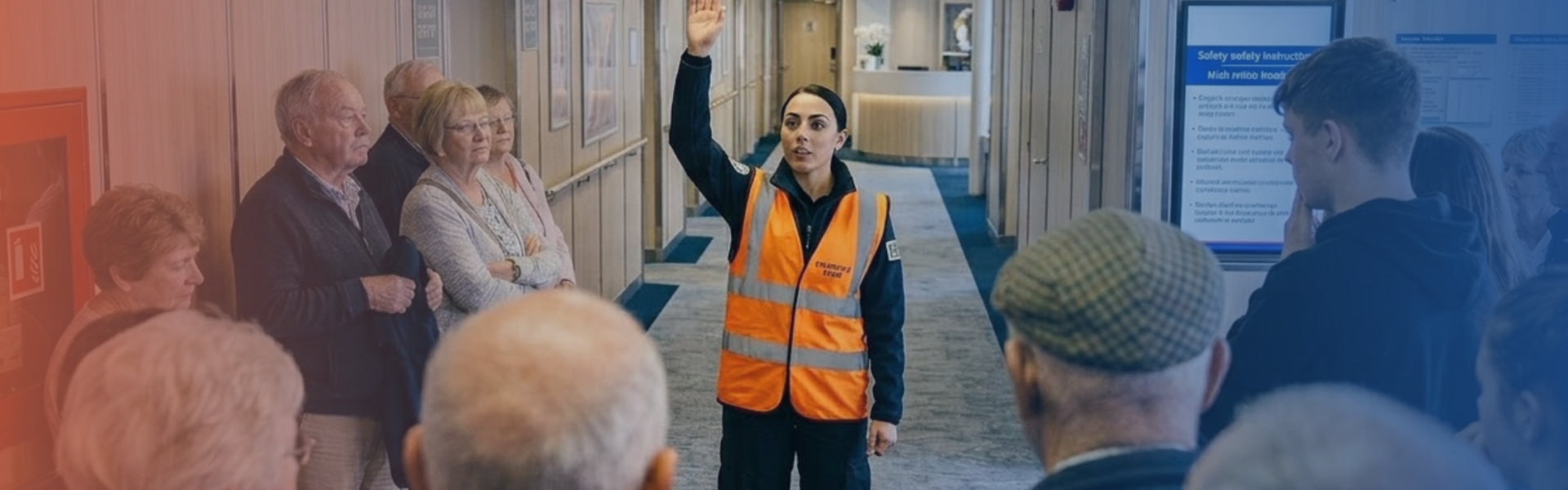

The cruise industry carries tens of millions of passengers every year, and ferries transport many millions more across the world’s straits and channels. For the vast majority, the journey is uneventful. But the industry’s strong safety record is no accident: it rests on international regulations that require crews to be trained for the worst day of their careers before it ever happens. Central to that preparation is a course known as crisis management and human behavior.
Lessons written in maritime history
Modern passenger ship safety rules were shaped by hard lessons. Investigations into major maritime accidents repeatedly reached the same conclusion: outcomes depended less on equipment than on how crews and passengers behaved in the critical first minutes. Confusion, delayed decisions, and panic cost lives; clear leadership and organized evacuation saved them.
Regulators responded through the STCW convention, the global standard for seafarer training. Today, stcw crisis management certification is required for masters, officers, and crew members responsible for the safety of passengers in emergency situations on passenger ships. For anyone seeking work on a cruise ship or ferry, it is a standard item on the requirements list.
What the training actually involves
The course tackles a deceptively difficult question: how do you get thousands of untrained civilians safely off a ship when they are frightened, disoriented, and in some cases unwilling to accept that an emergency is real?
Course content typically includes the psychology of people under stress, including panic, denial, and freezing; techniques for giving clear instructions and controlling crowds; organizing shipboard emergency procedures and resource allocation; coordinating and leading crew during an incident; and maintaining personal composure while making decisions under pressure.
The human behavior component is what gives the course its name and its reputation. Crew members learn that managing a crisis means managing people first.
Certification has moved online
While practical drills continue on board every ship, the theoretical certification itself can now be earned digitally. Maritime training providers deliver the module online, commonly listed as a crisis management course stcw compliant with the convention: candidates enroll, study the material at their own pace on any device, and complete a multiple-choice assessment.
Certificates from approved providers are issued under the authority of established flag states, including the Netherlands, Liberia, the Bahamas, and Panama, and are recognized by employers across the international fleet. Successful candidates can download their certificate immediately and request a signed original by mail, a level of convenience that has made online study the preferred route for many crew members between contracts.
Confidence for passengers, careers for crew
For travelers, the takeaway is reassuring: behind the entertainment and hospitality of a modern cruise stands a crew that has formally studied how to respond when things go wrong. For job seekers, the message is practical: crisis management certification is affordable, achievable online, and highly valued by recruiters in the passenger shipping sector.
The best emergencies are the ones that never happen. The second best are the ones handled by a crew that trained for them, and that training begins long before the ship leaves port.